

I've spent more than 20 years working in digital learning, and one of the most persistent challenges I've seen is keeping learning content up to date.
It's particularly difficult for software companies. Products are constantly evolving, new features are released and customer support teams discover problems that weren't anticipated when the original learning was developed.
Meanwhile, the learning team is often working in a separate system, trying to keep up.
AI is now making it dramatically easier to create learning content. But making content easier to create doesn’t necessarily make it easier to maintain.
In fact, as the volume of learning content grows, keeping everything accurate and relevant could become an even bigger challenge.
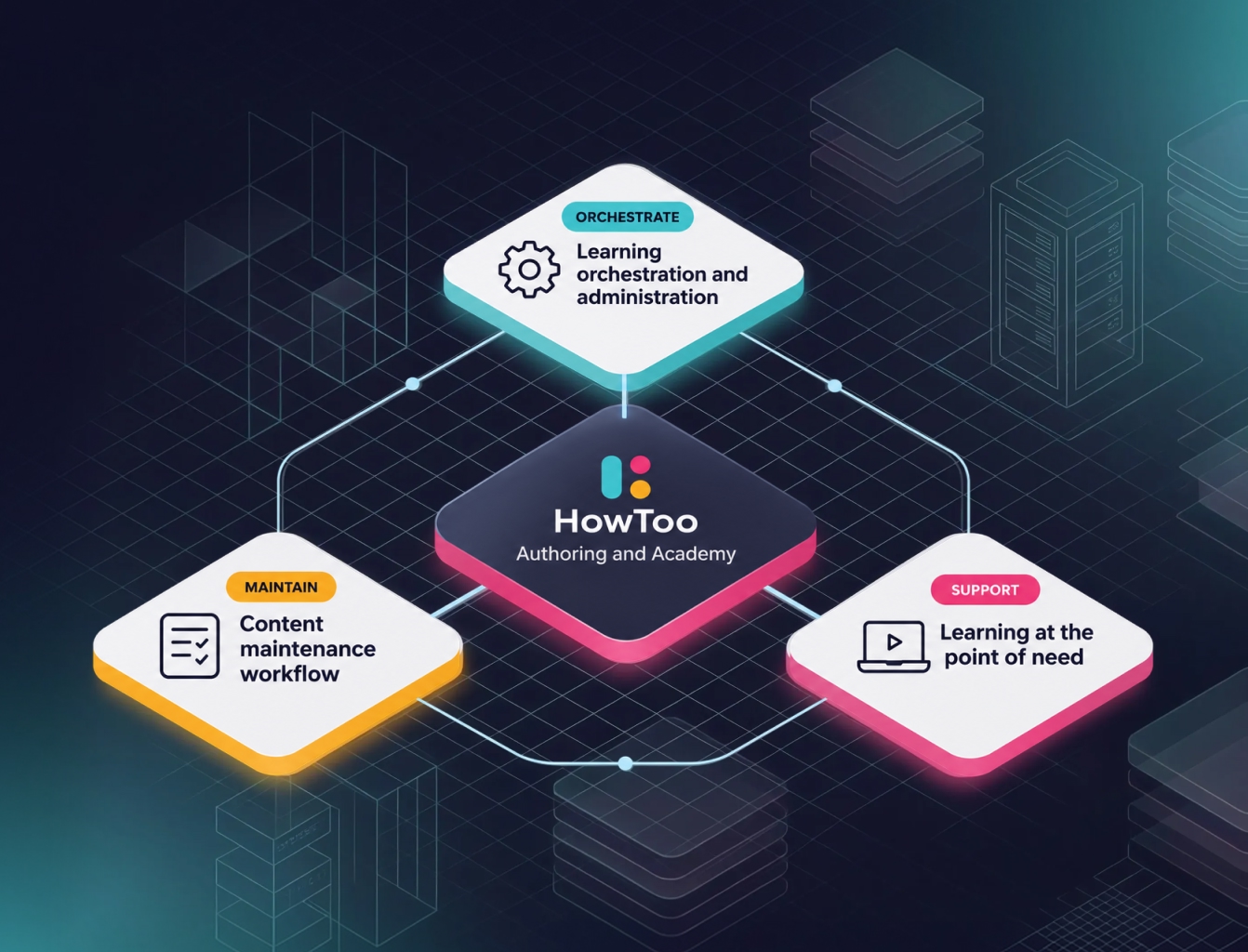
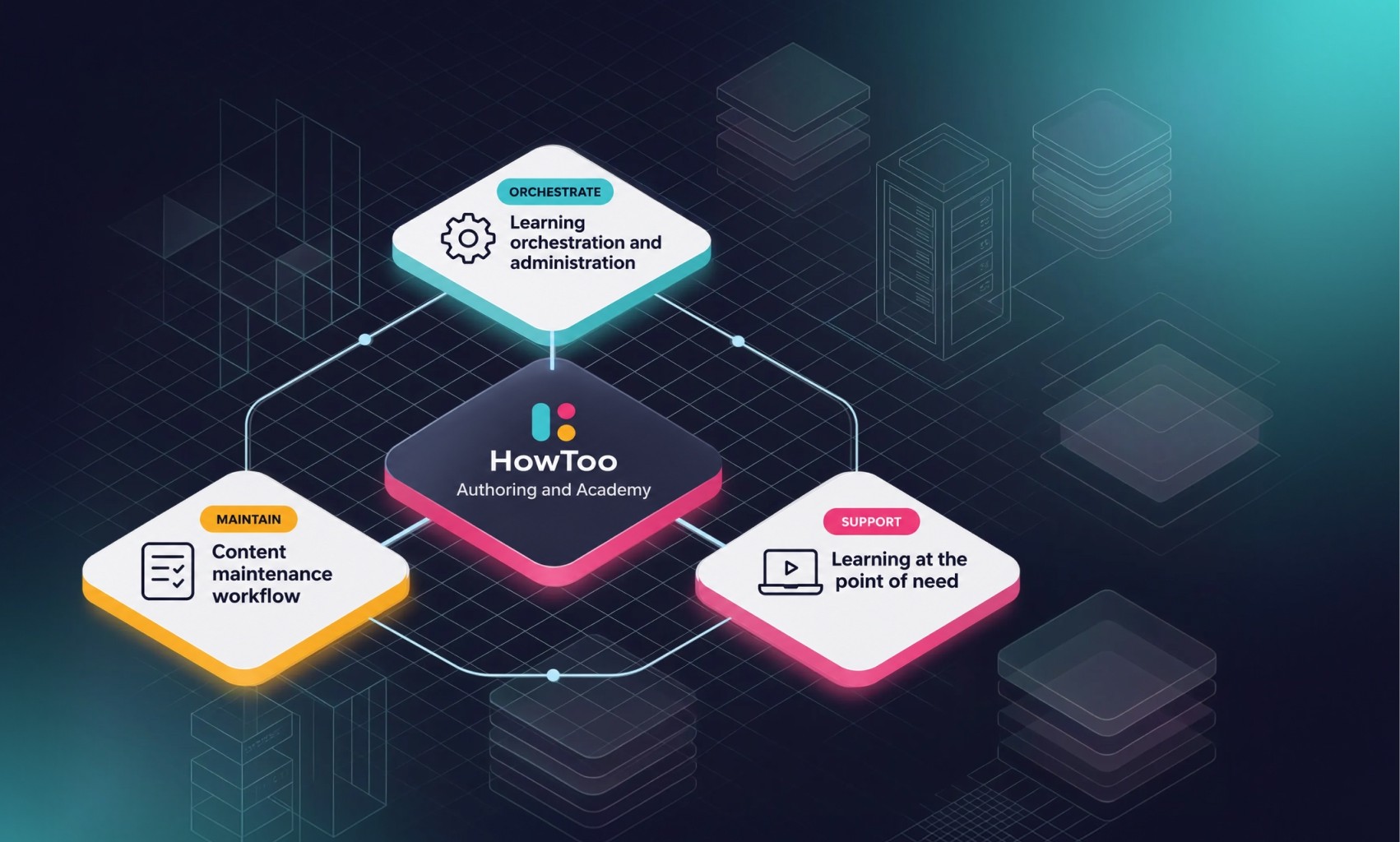
This is where we think the next significant shift in customer education will happen, through what we're calling connected learning architecture.
The problem with standalone learning platforms
Most learning management systems were designed around a straightforward process. Someone creates learning content, publishes it and assigns it to learners. The platform tracks participation and completion.
That model works reasonably well when the subject matter is stable.
But consider a B2B software company releasing new functionality every few weeks.
A product manager records changes in Jira. Customer support teams identify recurring issues in Intercom. Customer success managers track onboarding and adoption in Salesforce or HubSpot.
All these systems contain information that could improve customer education.
Yet the learning platform often has little awareness of what's happening in any of them.
Someone has to notice a change, work out which lessons are affected and organise the updates.
The problem isn't necessarily the quality of the learning platform. It's the way learning has traditionally been architected.
From integrated learning to connected learning
We've been talking about learning platform integrations for years.
Connecting an LMS to a CRM is useful. It allows businesses to automate enrolments, share completion data and give customer success teams visibility of learning activity.
But integrations alone don't fundamentally change how learning operates. They typically allow information to move between systems.
Connected learning architecture goes further.
It allows information from other business systems to inform what happens within the learning environment, including when content needs attention and when customers might benefit from additional learning.
Imagine a software company releases an update to one of its core features.
The change is recorded in Jira, and the support team begins receiving questions about the new functionality.
Today, someone in the learning team might eventually discover that several lessons need updating.
But what if that process could begin automatically?
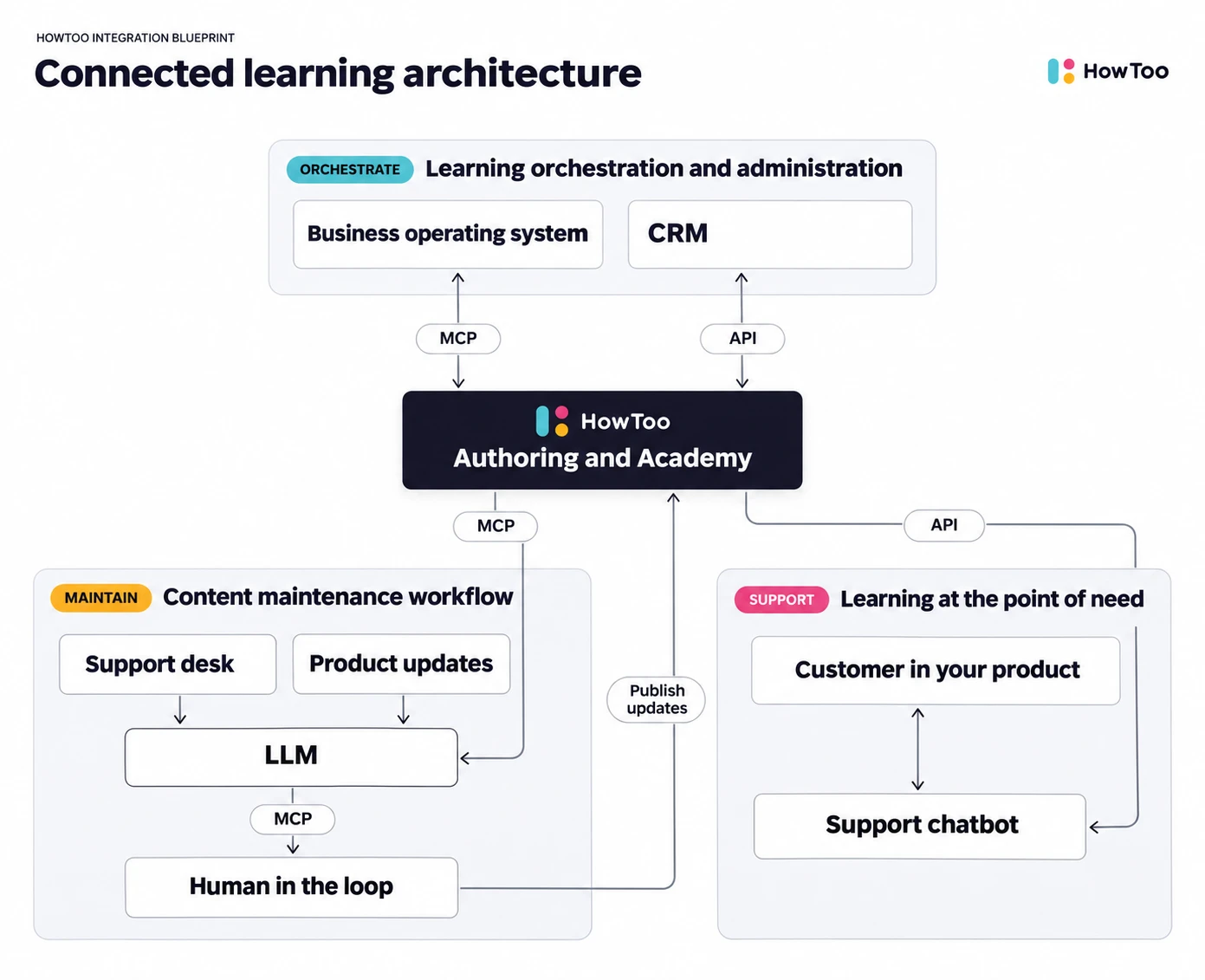
An AI agent could examine relevant product changes and support conversations, review the existing learning content and identify lessons that may be affected.
It could then propose updates for review.
A learning specialist would check the educational quality, while a product expert would confirm technical accuracy. Once approved, the updated content could be published wherever customers access learning.
Instead of waiting for someone to discover that learning is out of date, the learning environment could actively identify what needs attention.
This is a fundamentally different approach to maintaining learning content.
So what does connected learning architecture look like in practice? The diagram below illustrates how product management, customer support and CRM systems can connect with learning through AI agents, allowing content to be maintained and delivered as part of the wider customer experience.
How AI agents and MCP are changing what's possible
Two developments are making this increasingly practical: AI agents capable of carrying out tasks across different systems, and the Model Context Protocol (MCP), which provides a standardised way for AI applications to connect with external tools and information.
Together, they create opportunities for learning platforms to become active participants in broader business workflows.
At HowToo, we've developed MCP capabilities that allow AI-enabled systems to interact with learning content.
We're particularly interested in how these capabilities can support content maintenance, where AI identifies potential changes and proposes updates for human review.
This doesn't mean handing responsibility for learning to AI.
People still need to ensure that content is accurate, educationally effective and appropriate for the audience.
But AI can take on much of the investigative work, allowing learning specialists to focus on the quality of the experience rather than the mechanics of keeping everything current.
And that's a much more interesting opportunity than simply generating courses faster.
Learning should be available where customers need it
Content maintenance is only one part of connected learning architecture.
The other is making learning available within the customer experience itself.
Most software companies already have places where customers go for help, whether that's an in-product assistant, a support chat or a knowledge base.
But those experiences are often disconnected from structured learning content.
Imagine a customer struggling with a complex workflow.
Rather than simply providing instructions, an AI assistant could surface a relevant lesson or interactive demonstration directly within the product.
The customer wouldn't need to leave their workflow, search through an academy and work out which course to take.
The learning would come to them.
This is where headless learning delivery becomes important. Learning content can be managed centrally but delivered through different interfaces, including the software product itself.
The academy still has a role, particularly for structured onboarding and certification. But it no longer needs to be the only place where learning happens.
And importantly, making learning more accessible doesn't make learning design any less important.
There's a difference between giving someone an answer and helping them develop the confidence to complete a task independently.
AI can help connect people with the right learning. Good learning design ensures that learning actually works.
Connecting learning to business outcomes
There's another reason I'm excited about this approach.
For years, demonstrating the business impact of learning has been something of a holy grail.
We've become good at tracking learning activity, but much less successful at understanding how that activity influences customer behaviour.
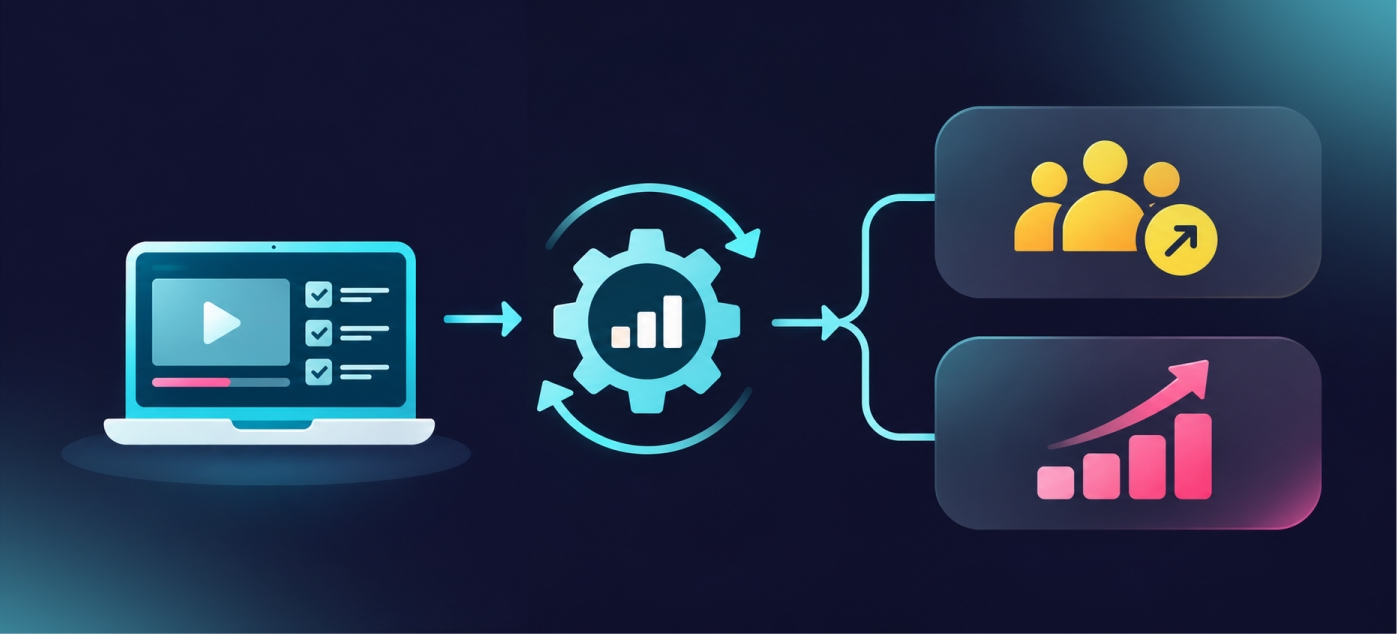
When learning data is connected with CRM, support and product usage data, we can start asking much more interesting questions.
Are customers who complete onboarding adopting more functionality? Are they raising fewer support tickets? Where are customers continuing to struggle, even after completing training?
That last question is particularly interesting.
If customers repeatedly struggle with a learning activity, perhaps the learning needs improvement. But perhaps the product itself is confusing.
Learning data could help product teams identify usability problems that might otherwise be difficult to detect.
We're already seeing the foundations of this approach with customers such as Tensis, which has connected its HowToo academy with HubSpot, bringing learning activity into its broader customer management environment.
The opportunity now is to build on those connections and use learning data to better understand customer success.
The future of customer education is connected
For companies investing in customer education, we think it's time to reconsider what we should expect from a learning platform.
Traditionally, the questions have been about authoring tools, course delivery and reporting.
Those things still matter. But increasingly, we need to ask how learning connects to the wider technology ecosystem.
Can it draw on the systems where product knowledge lives? Can AI help identify when content needs updating? Can learning be delivered directly within the customer experience?
And can we finally start connecting what people learn with what they go on to achieve?
At HowToo, this is the direction we're working towards.
We've spent decades making it easier to create and deliver digital learning. AI is accelerating that work in ways that would have been difficult to imagine just a few years ago.
But we don't think the next big opportunity is simply to produce more content.
It's to build learning systems that can keep up with the products, customers and businesses they support.
More from
Customer education
category